

Easing Conditions Eroded by Iranian War
The conflict in Iran has materially altered our expectations for 2026. At the start of the year, we anticipated a combination of structural improvements in South Africa’s economic fundamentals and a cyclical easing in financial conditions. Against this backdrop, earnings expectations were constructive, and we expected a market rerating to support high-teen total returns for domestic equities.
A key pillar of this constructive outlook was declining inflation and interest rates. Within six weeks of the outbreak of hostilities, Brent crude prices in rand terms nearly doubled, driving domestic energy prices higher by between 30% and 50% over a short period. This resulted in a sharp acceleration in fuel inflation, although there has thus far been limited evidence of broader second-round effects across the consumer basket. Additionally, inflation expectations in the near and long term have risen sharply.
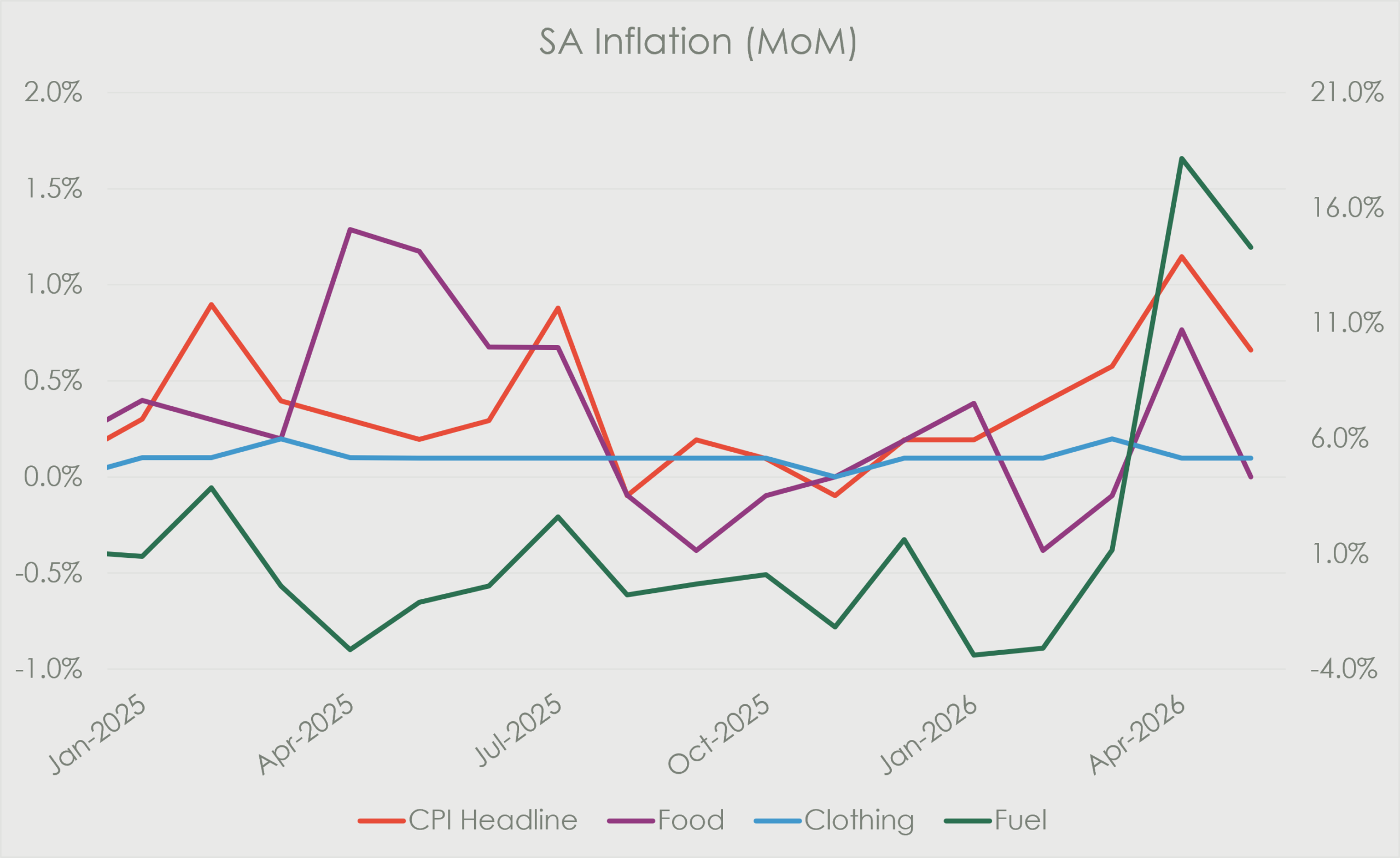
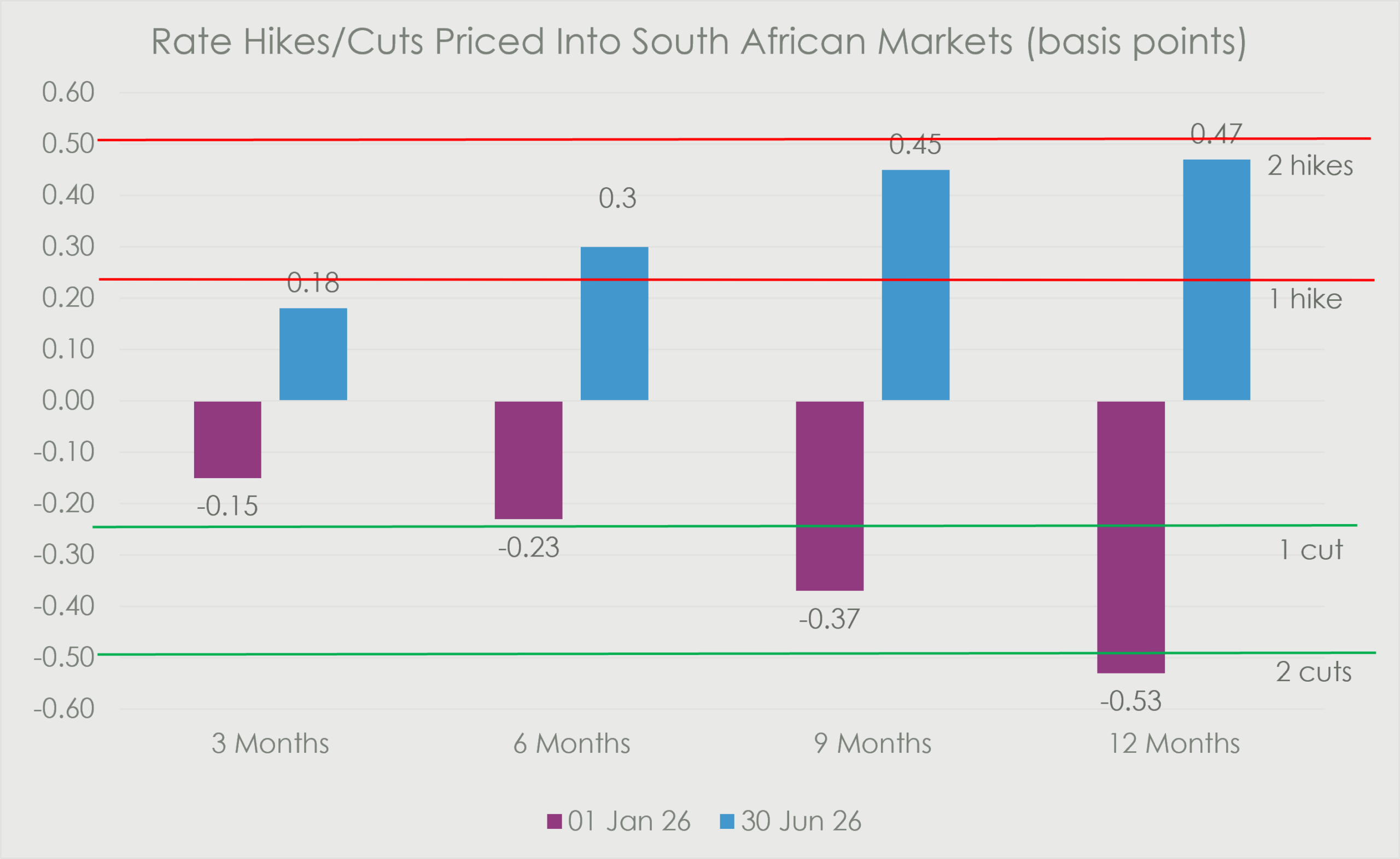
The speed and magnitude of the inflation shock triggered a significant repricing of the South African interest rate outlook, shifting market expectations from two rate cuts at the beginning of the year to a hike at the May meeting and a further two hikes currently being priced in.
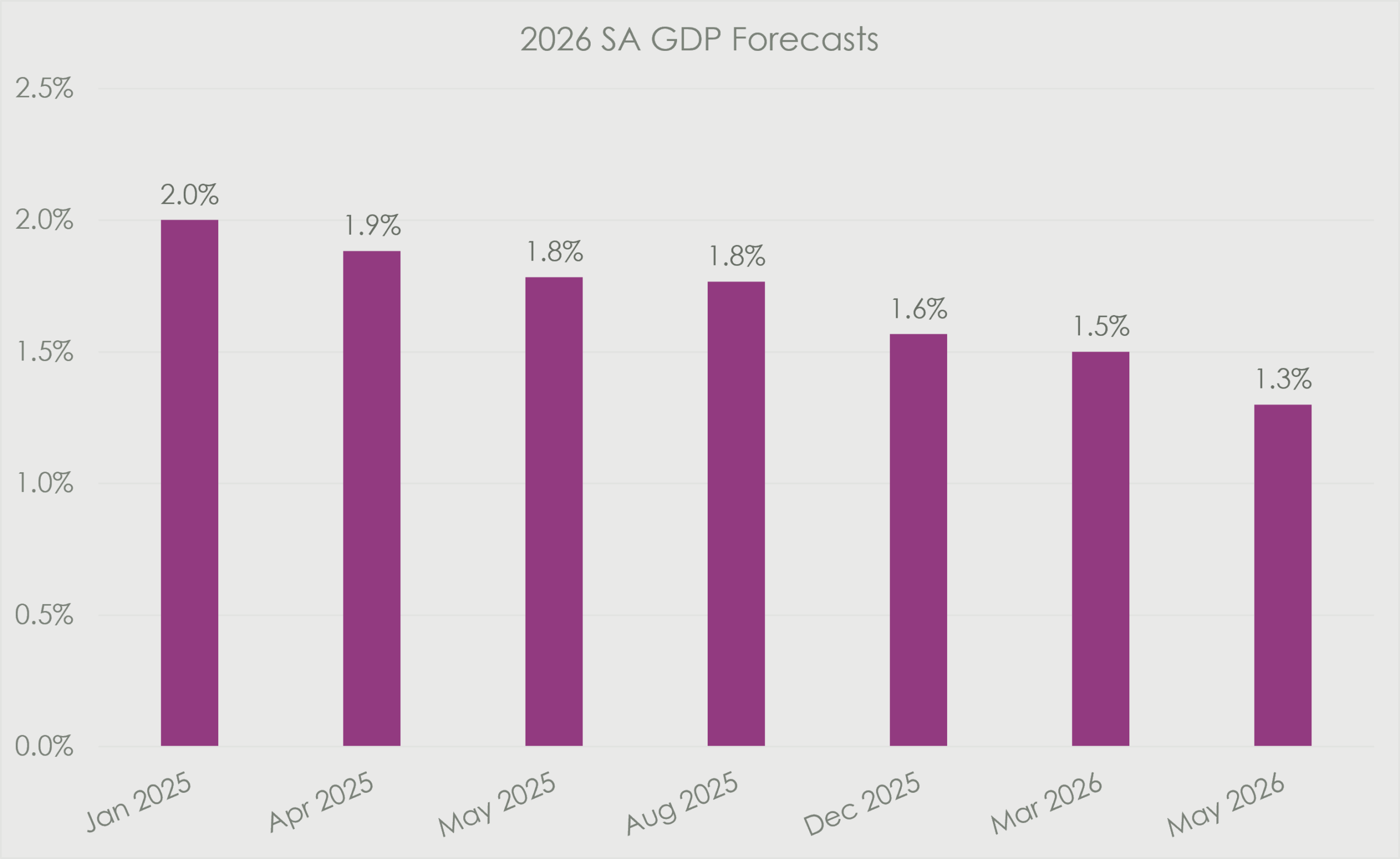
Accompanying this tightening in financial conditions have been downward revisions to economic growth expectations. The current expectation is higher than the 2025 growth rate, however the direction of travel of the estimate is not supportive of a sustained rerating of South African equities.
Despite the deterioration in the macro environment, the underlying structural fundamentals of the South African economy have continued to improve. The operational recoveries at Eskom and Transnet remain on track, while National Treasury delivered another market-friendly budget focused on fiscal consolidation and confirming a peak in the public debt trajectory. Following S&P’s sovereign rating upgrade in November last year, Fitch also upgraded South Africa’s sovereign credit rating – its first upgrade in nearly two decades – while Moody’s revised its outlook from stable to positive.
External Shocks Weighing on Business and Consumer Confidence
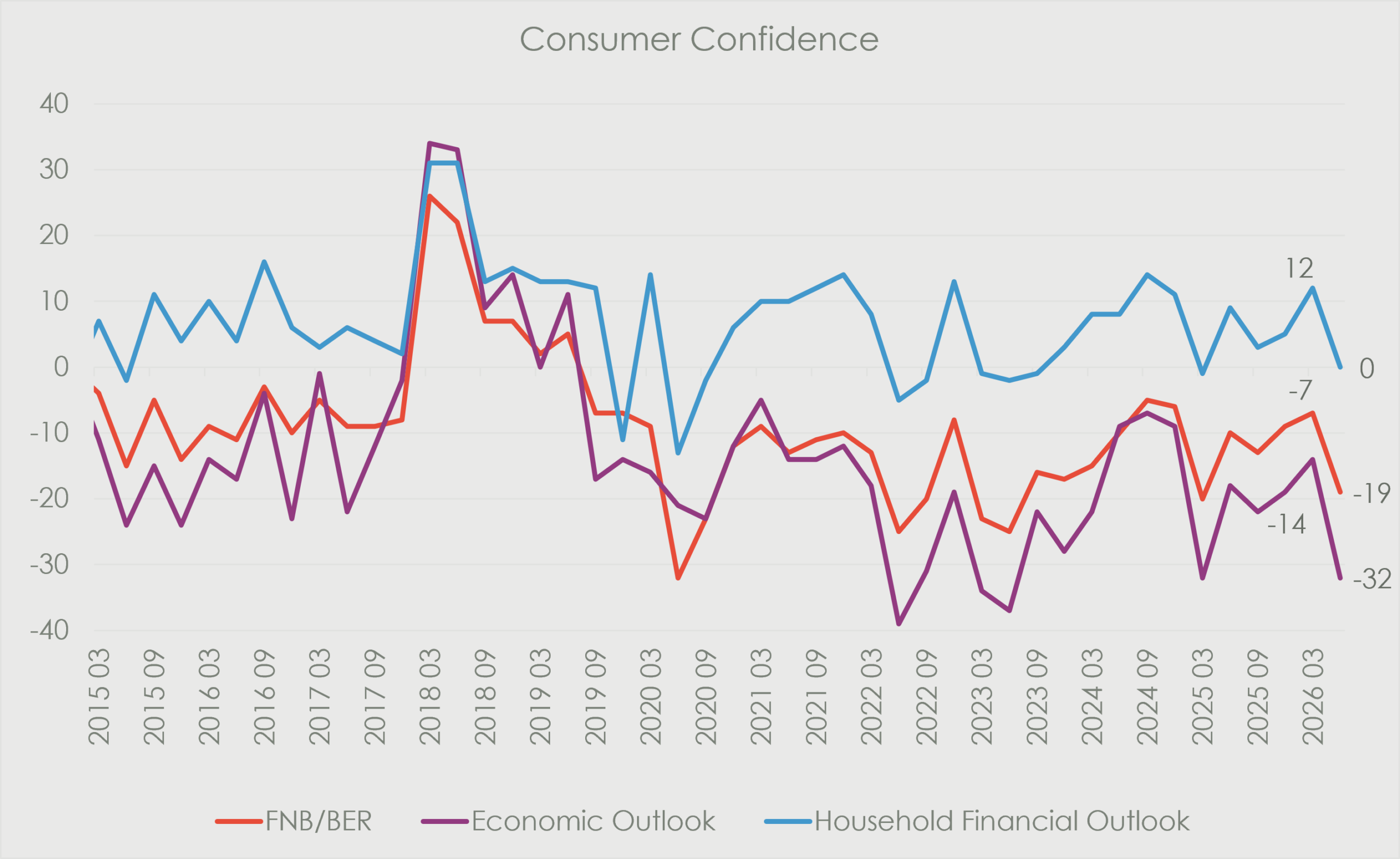
Consumer confidence fell sharply following the outbreak of the conflict, declining from a fifteen-month high to levels last seen in early 2025. Expectations regarding both personal finances and the broader economy deteriorated materially, largely reflecting higher fuel prices. Consequently, we expect real household consumption growth to come under pressure during the second half of the year.
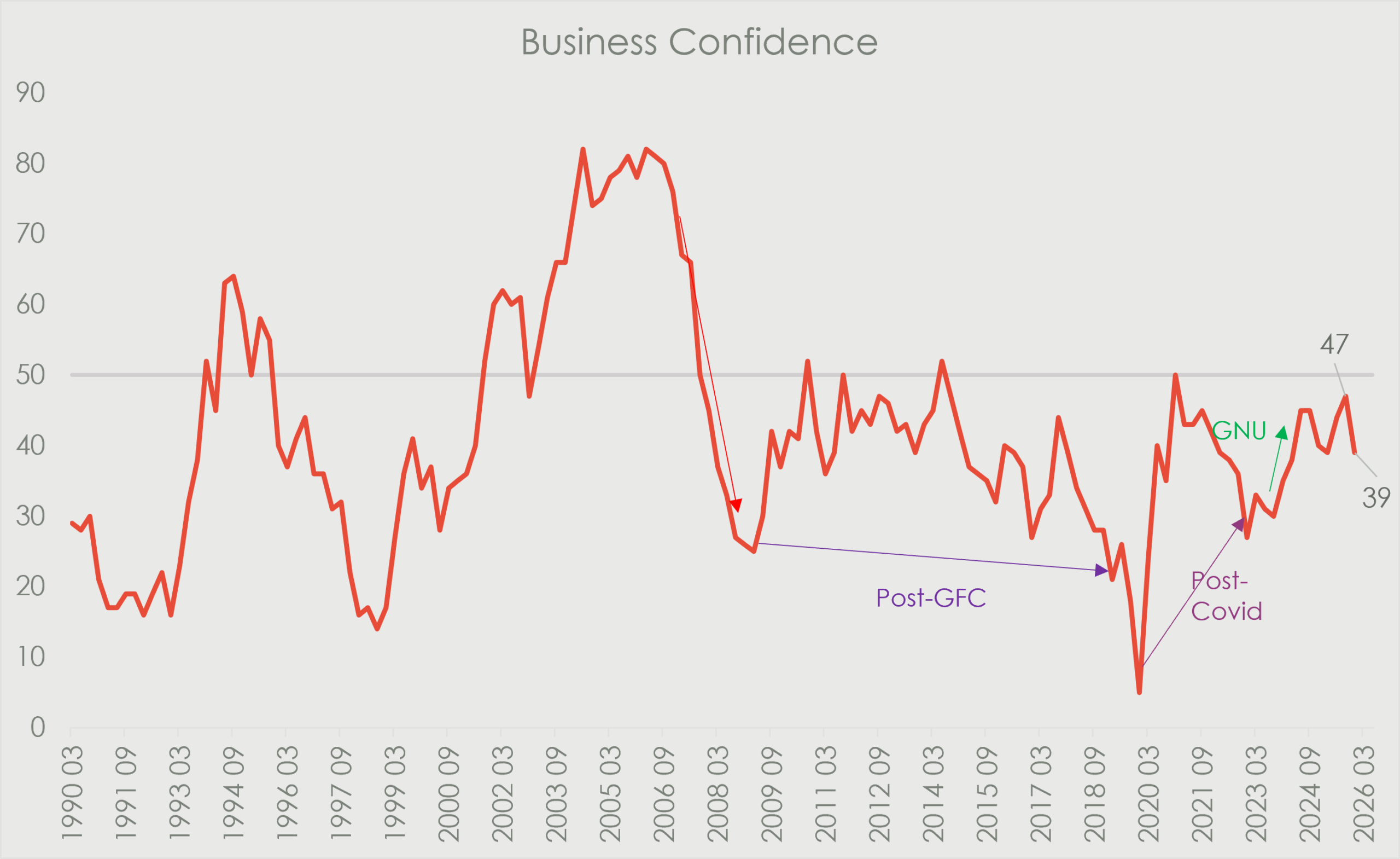
Similarly, after two consecutive quarters of improvement, business confidence declined to below its longterm average as corporates adopted a more cautious stance toward investment and spending decisions. Encouragingly, survey evidence suggests that the external shock interrupted, rather than fundamentally derailed, the recovery in business sentiment.
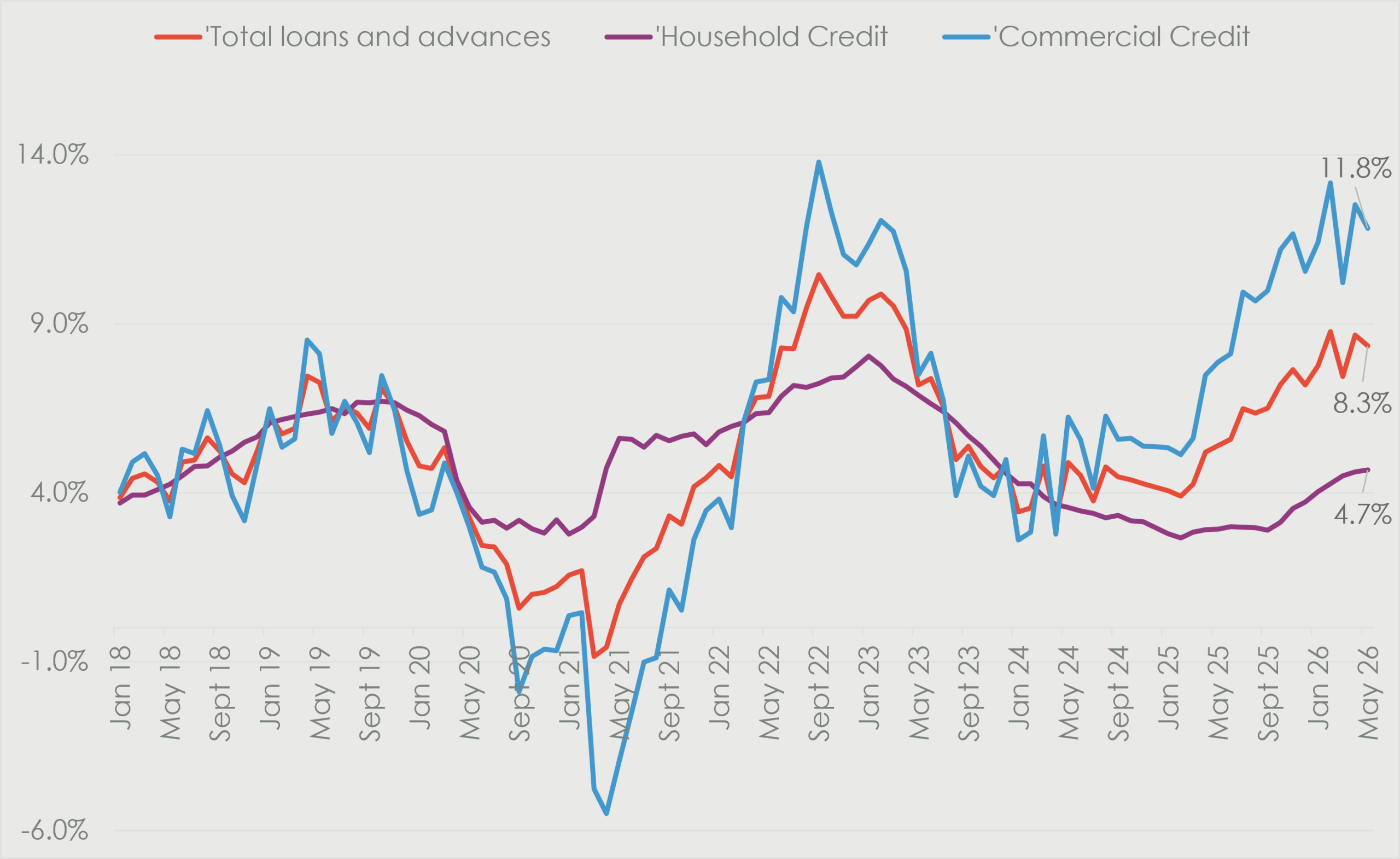
To date, the acceleration in credit extension observed over the past year has been interrupted only modestly within commercial lending. Household credit growth has continued its gradual recovery since September 2025, supported by improving momentum in mortgage lending.
South African Assets Demonstrating Resilience
The rand and domestic bond market proved relatively resilient during the worst of the war-induced market sell-off, reflecting the strengthening of South Africa’s underlying economic fundamentals. In the absence of further prolonged disruptions in the Middle East, we expect these supportive dynamics to persist.
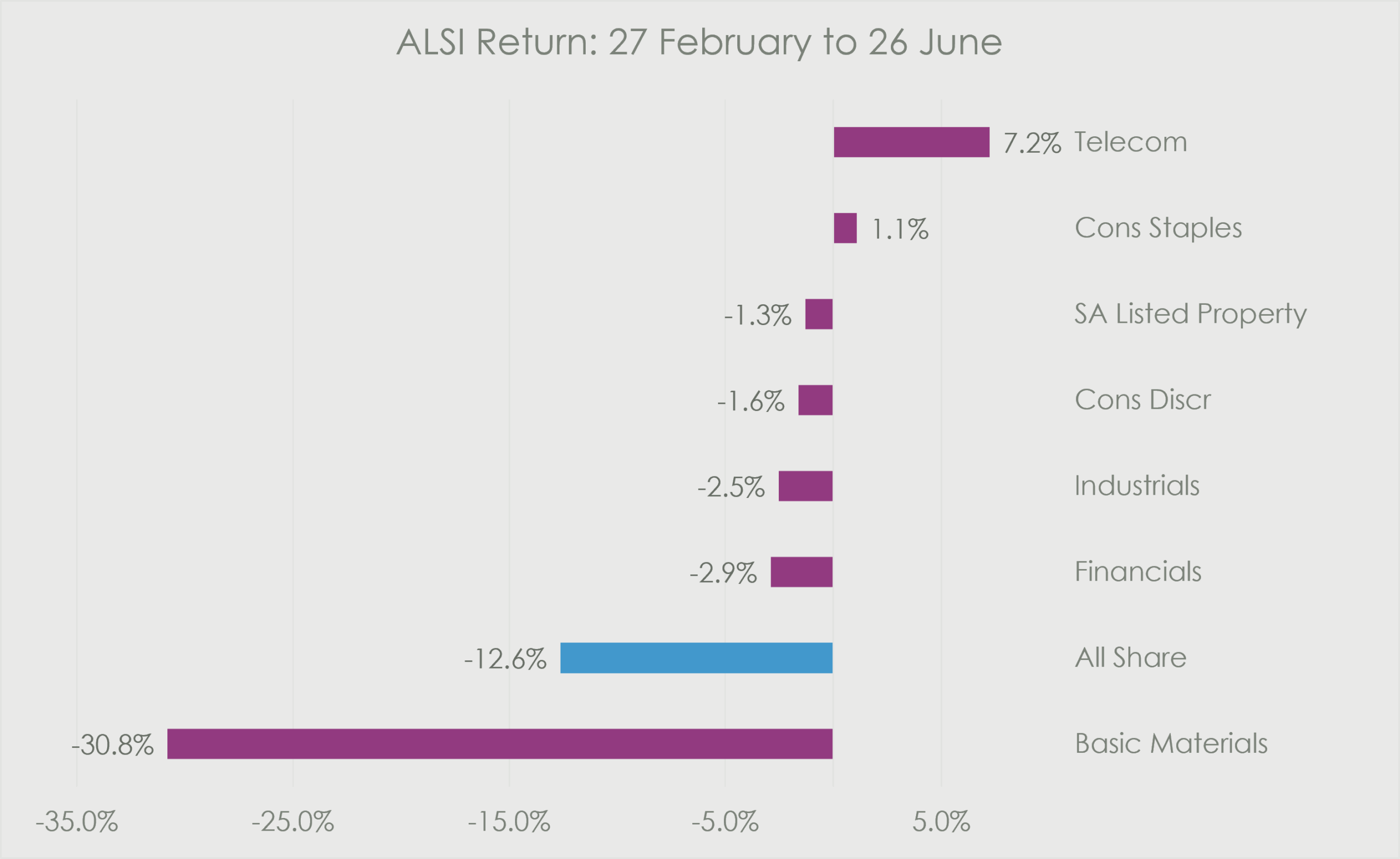
The South African equity market’s significant exposure to precious metals has increased overall market volatility, contributing to underperformance relative to broader emerging market peers.
However, having entered the period on already depressed valuations, domestically exposed sectors have demonstrated resilience, while rand-hedge consumer stocks have benefitted from a global rotation toward more defensive market segments.
Inflation’s Upward Trajectory Will Drive Market Performance
Our view remains that Brent crude at US$75 per barrel underestimates the extent of disruption to global supply chains. In addition, low inventory levels and continued supply discipline among producers are likely to sustain elevated energy prices over the near term. Under these conditions, we expect inflation and interest rates to remain higher for longer, creating a more challenging environment for risk assets.
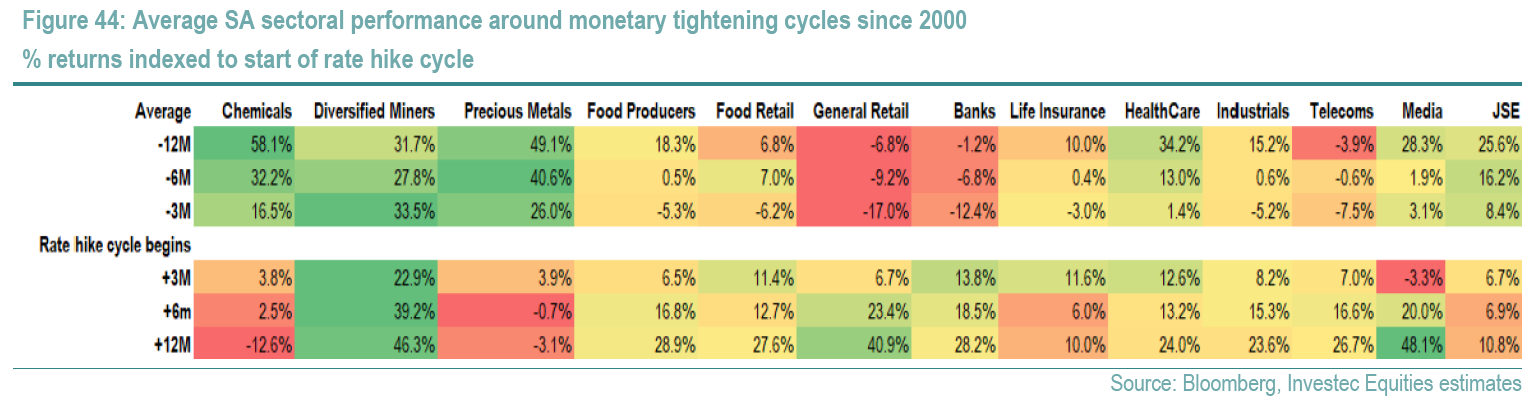
Historically, the onset of monetary tightening cycles has been associated with weaker equity market returns, particularly in cyclical sectors such as discretionary retail and industrials. Conversely, defensive sectors – including food retail, banking and diversified mining – have tended to outperform. Over the course of the first half of the year, we have shifted the focal point of our portfolios accordingly.
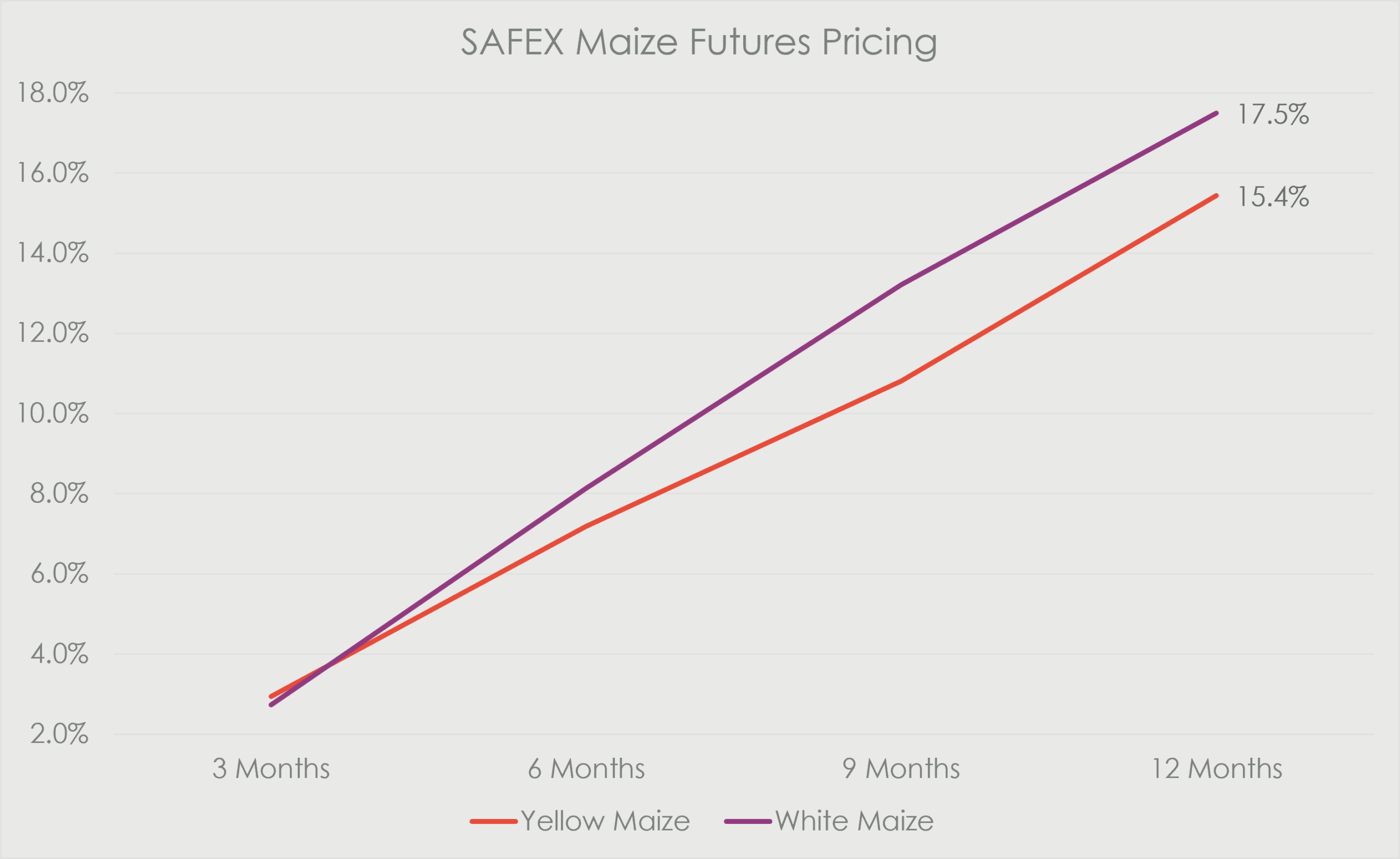
Our concerns regarding fuel-driven food inflation are further amplified by the increasing probability of an El Niño weather pattern developing during the second half of the year. Such an event would likely reduce agricultural output and increase agricultural commodity prices. Current estimates suggest a 60% to 80% probability of an El Niño event, with the potential to drive grain prices higher by approximately 15% and push food inflation above 5%.
Grain forward curves already reflect a portion of this risk. In such an environment, consumers typically prioritise essential goods and trade down in search of value, supporting relative outperformance by consumer staples businesses.
Valuations
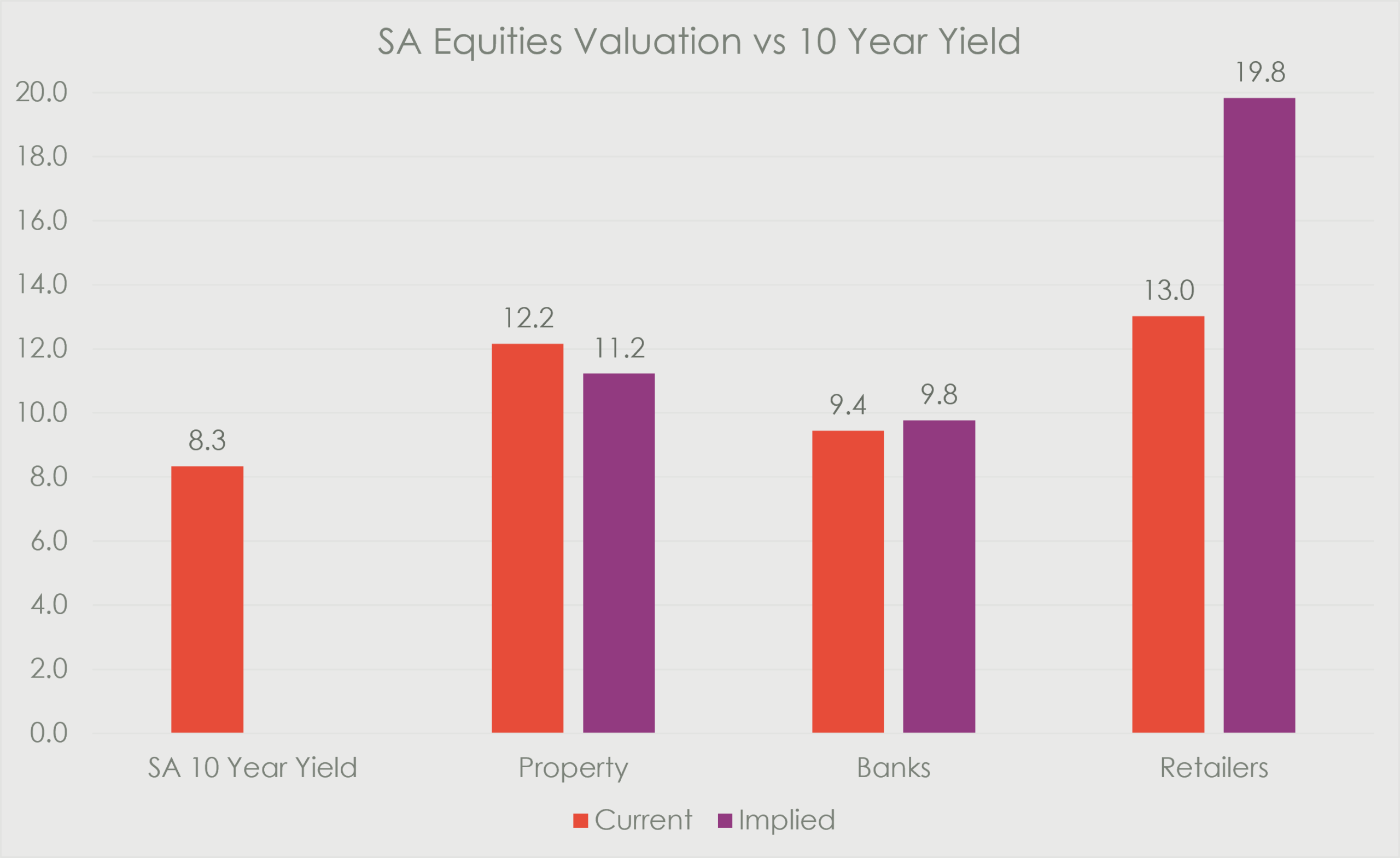
Despite the softer macroeconomic backdrop, market interest rates have remained relatively resilient, and we expect this trend to continue. In our view, this should provide an important anchor for equity valuations. On an earnings yield basis, banks and listed property companies now offer yields comparable to South African government bonds, while the retail sector continues to screen attractively on a relative valuation basis.
Foreign capital flows remain an important determinant of market performance. At the beginning of the year, foreign investors were net purchasers of South African equities, acquiring approximately R35.7 billion as supportive global conditions and improving sovereign fundamentals bolstered sentiment. Since the outbreak of the conflict, however, foreign investors have sold approximately R25.6 billion of domestic equities.
Stabilisation in earnings revisions will likely be an important catalyst for renewed foreign participation and improved market valuations.
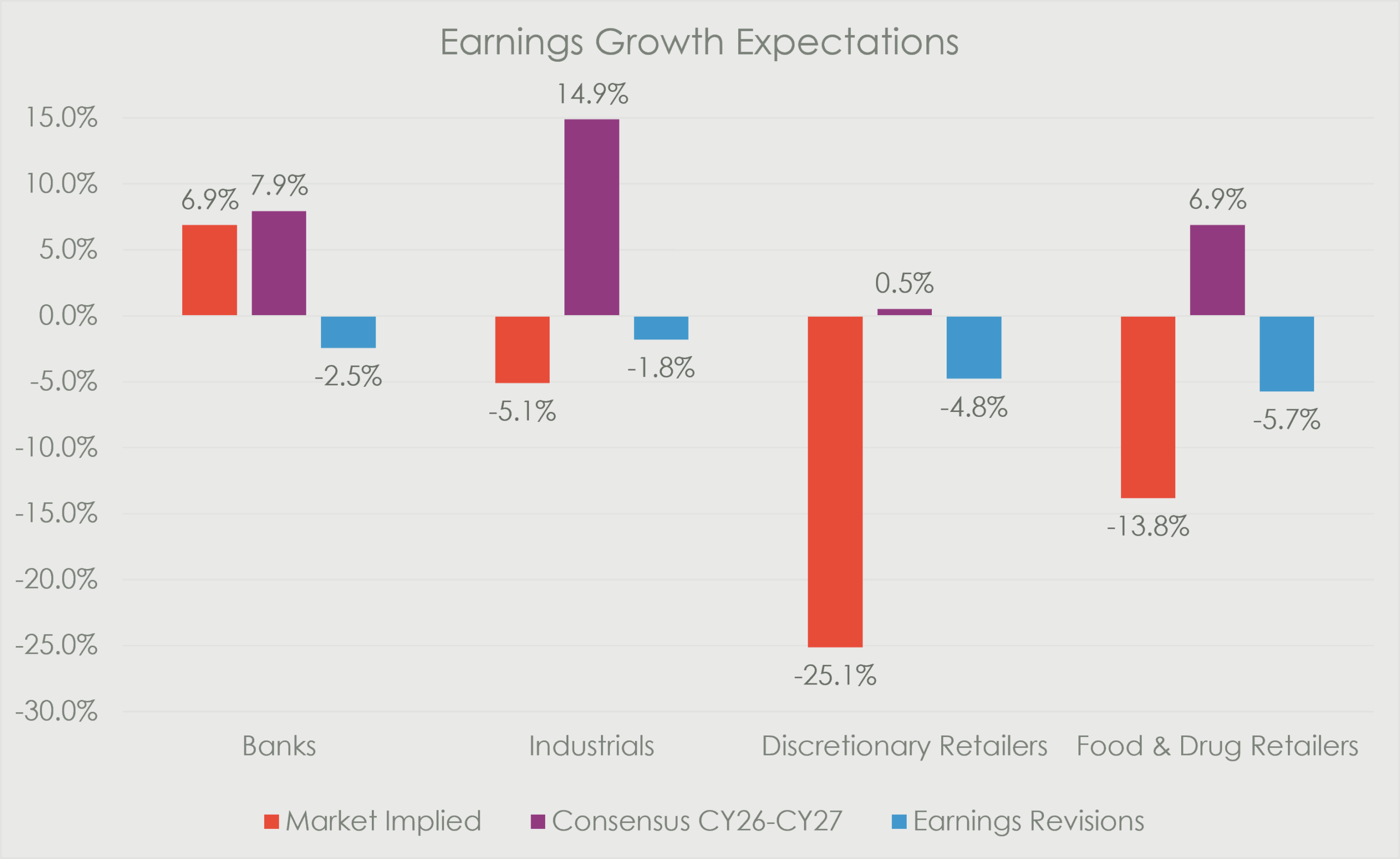
Our positioning reflects our expectation of a softer macroeconomic environment, where heightened uncertainty constrains both consumption and investment activity. We remain focused on companies exhibiting strong underlying fundamentals, defensive earnings characteristics and robust market share positions.
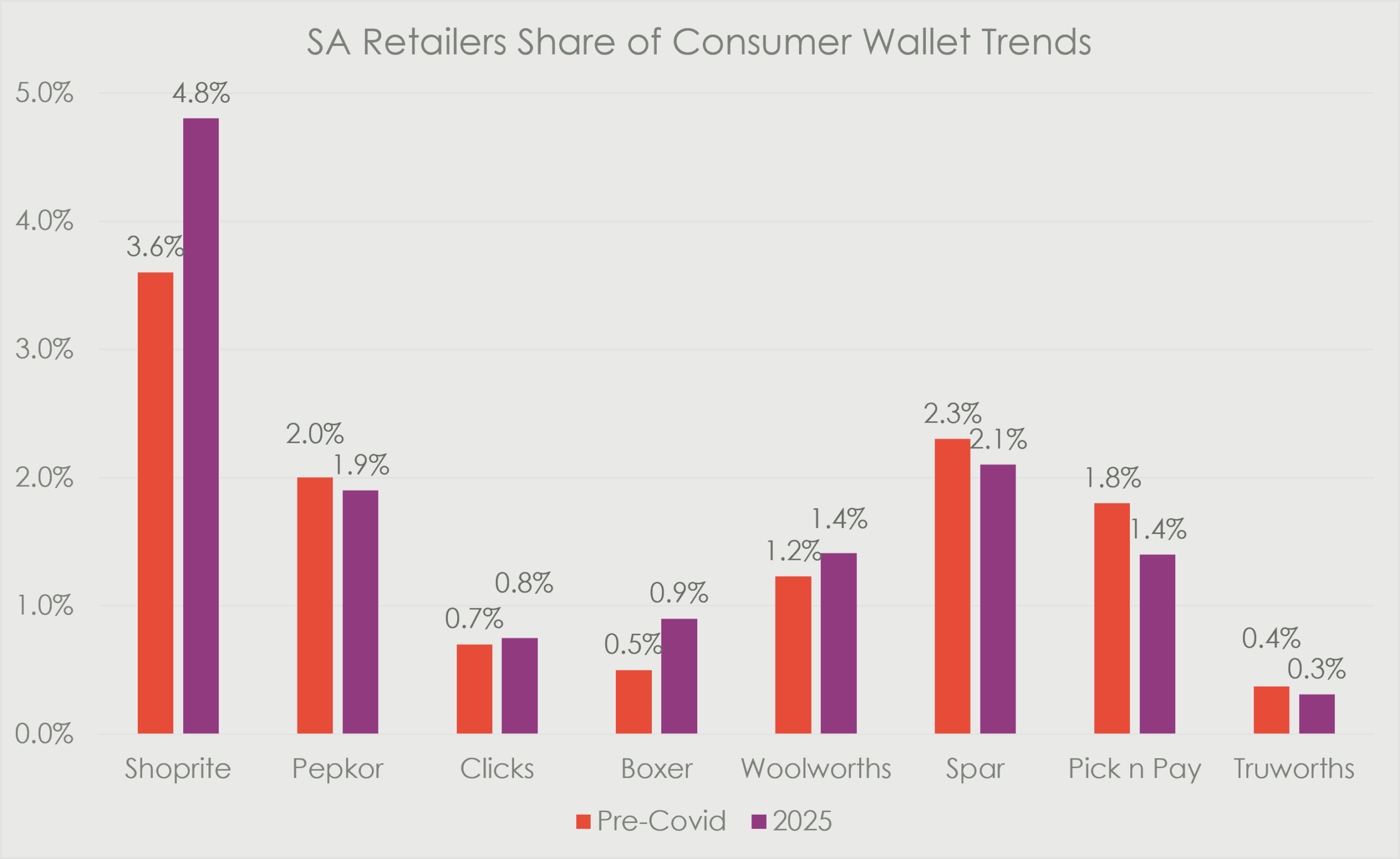
We expect accelerating headline and food inflation, combined with a higher-for-longer interest rate environment, to influence consumer behaviour materially. In our view, consumers will increasingly prioritise staple goods while trading down as real disposable incomes come under pressure. This environment should favour retailers with strong private-label offerings and businesses that cater to lower income consumer segments.
Risks
The primary risks to our outlook remain exogenous. The ceasefire in Iran remains fragile, and a durable resolution appears unlikely in the near term. Consequently, we expect elevated market volatility to persist as investors navigate both the U.S. midterm election cycle and South Africa’s local government elections later this year.
Current polling suggests continued support for the Democratic Alliance, which would likely be viewed positively by financial markets. However, with coalition governments increasingly becoming the norm, negotiations in key metropolitan municipalities could have important implications for market sentiment.
Conclusion
Market conditions have softened demonstrably since the beginning of the war, reducing the prospect of market-wide uplift in risk assets. We have reacted by rotating out of our more cyclical names and into more defensive sectors, with a broad focus on increasing the resilience of our portfolios. This has seen us exit Mr Price, while also taking profits on our property exposure, in favour of Boxer, Clicks and South African government and corporate bonds.
Energy market tightness and pricing will be central to the direction of stocks for the remainder of the year, with the local consumer experiencing a deterioration of prospects relative to the optimism at the start of the year.