

Q2 earnings season saw major hyperscalers raise capex guidance yet again; reiterating that demand continues to outpace available capacity. Combined capex from Amazon, Microsoft, Alphabet, Meta and Oracle is estimated to reach an eye-watering $1.1 trillion in 2027.
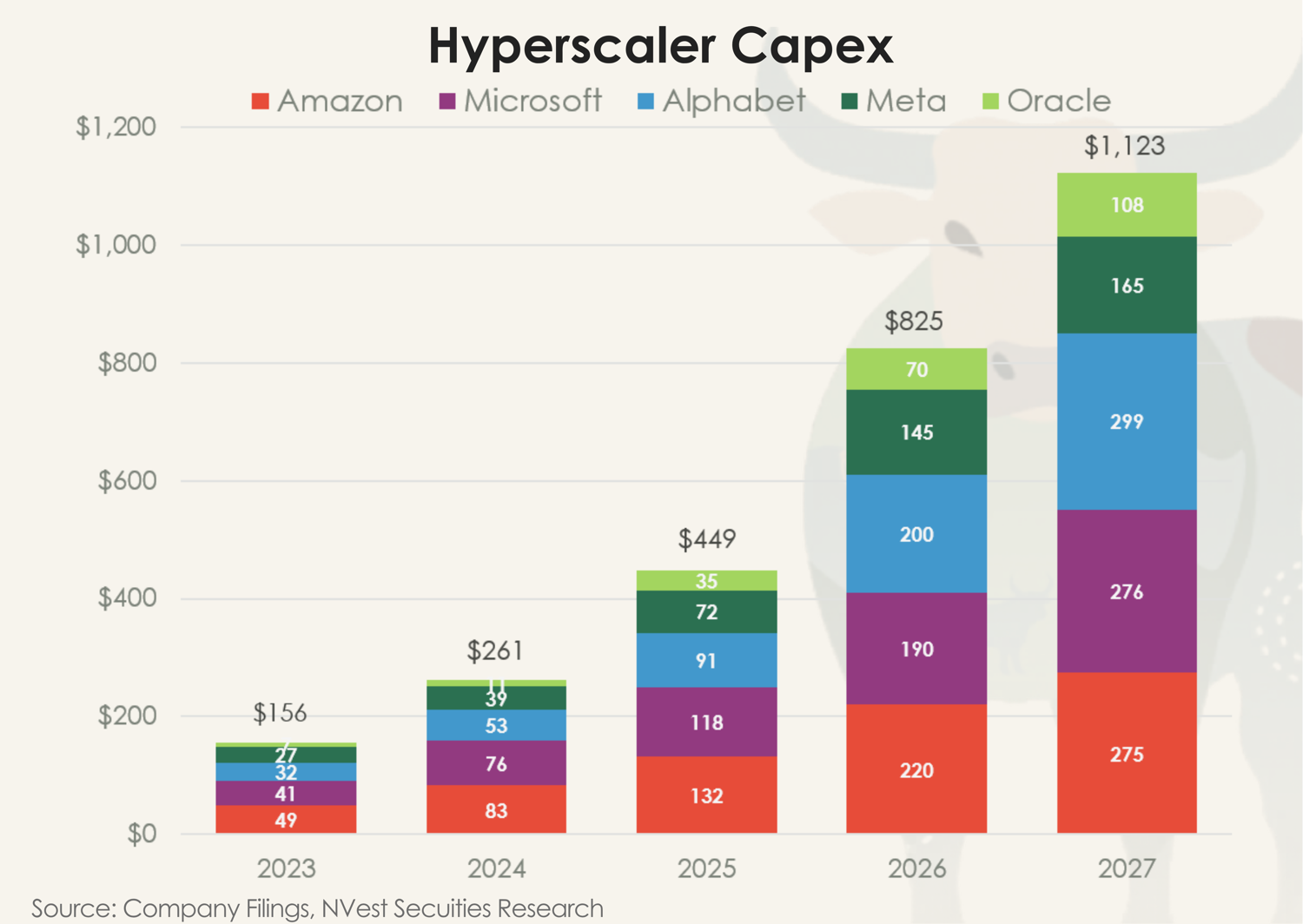
Capex Continues to Climb
Capex build-out shows no sign of slow down, as the continued upward revisions suggest that the demand for capacity remains greater than previously anticipated.
-
-
- Amazon raised its FY26 capex guidance to approximately $220 billion (71% year-over-year (Y/Y)). Management continues to expect capacity constraints through 2027 and remains confident in the long-term returns available from AI investment.
- Alphabet increased its capex guidance to $195–205 billion, reflecting continued AI demand in excess of available supply. Expectations for 2027 have also moved materially higher.
- Microsoft’s reported capex expectation has moved from approximately $190 billion to $175 billion, but reflects the reclassification of certain data-centre leases from finance leases to operating leases and not a reduction in infrastructure investment. AI infrastructure remains the priority, with management noting that customers are screaming for more supply.
-
Cloud Monetization is Accelerating
While equity markets remain concerned about how these massive Capex programs are going to be funded – with doom sayers focusing on the increasing debt issuance – results showed broad-based acceleration across the major Cloud platforms, as monetization steps up. Amazon Web Services (AWS) grew 37% Y/Y, Microsoft Azure grew 43% and Google Cloud accelerated to 82%.
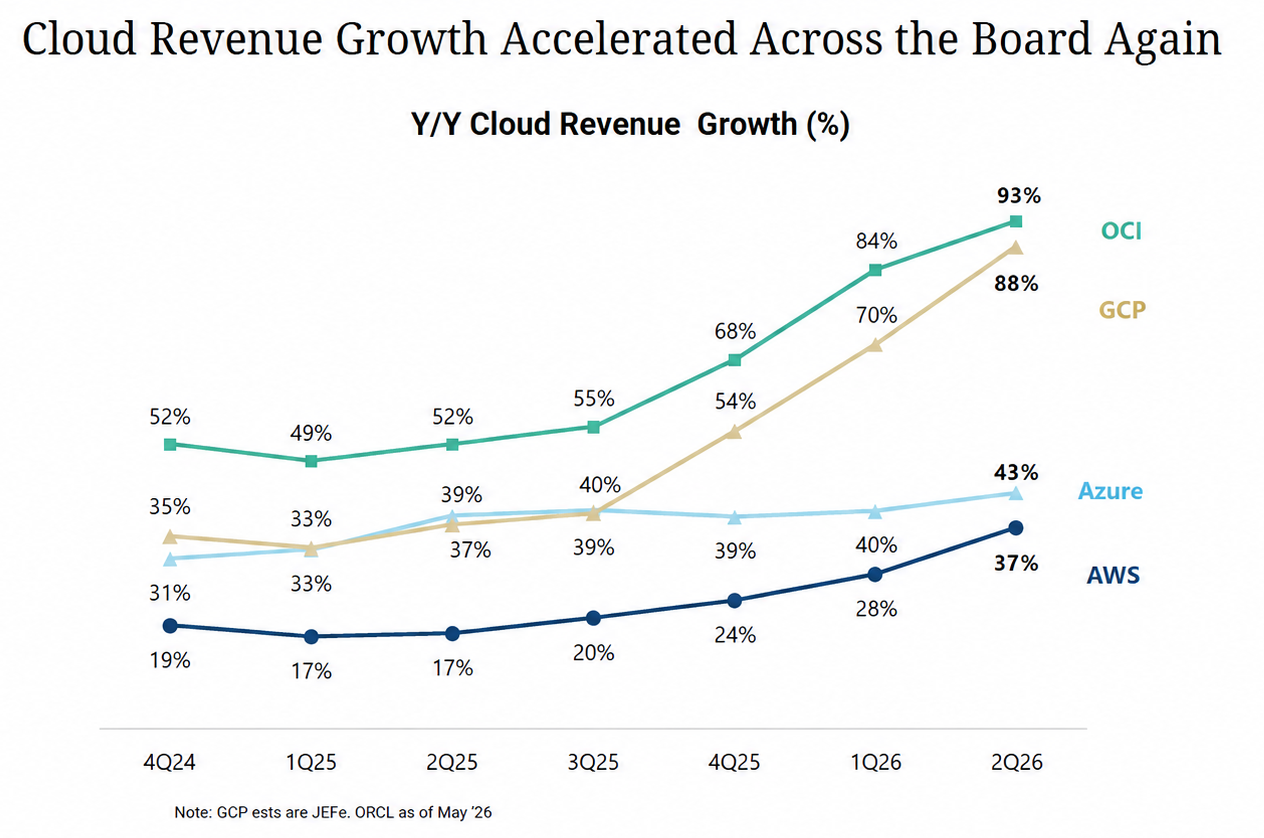
Source: Jefferies, Company Data
What is particularly encouraging is that these growth rates are being achieved despite being constrained – constrained by limited capacity in data centers, insufficient power supply, shortages in qualified labour such as electricians and plumbers to get the data centers up and running, as well as shortages in advanced semiconductor chips.
In the absence of these capacity constraints, revenues would have been substantially higher.
Backlog Provides Evidence that AI Demand Has a Long Runway
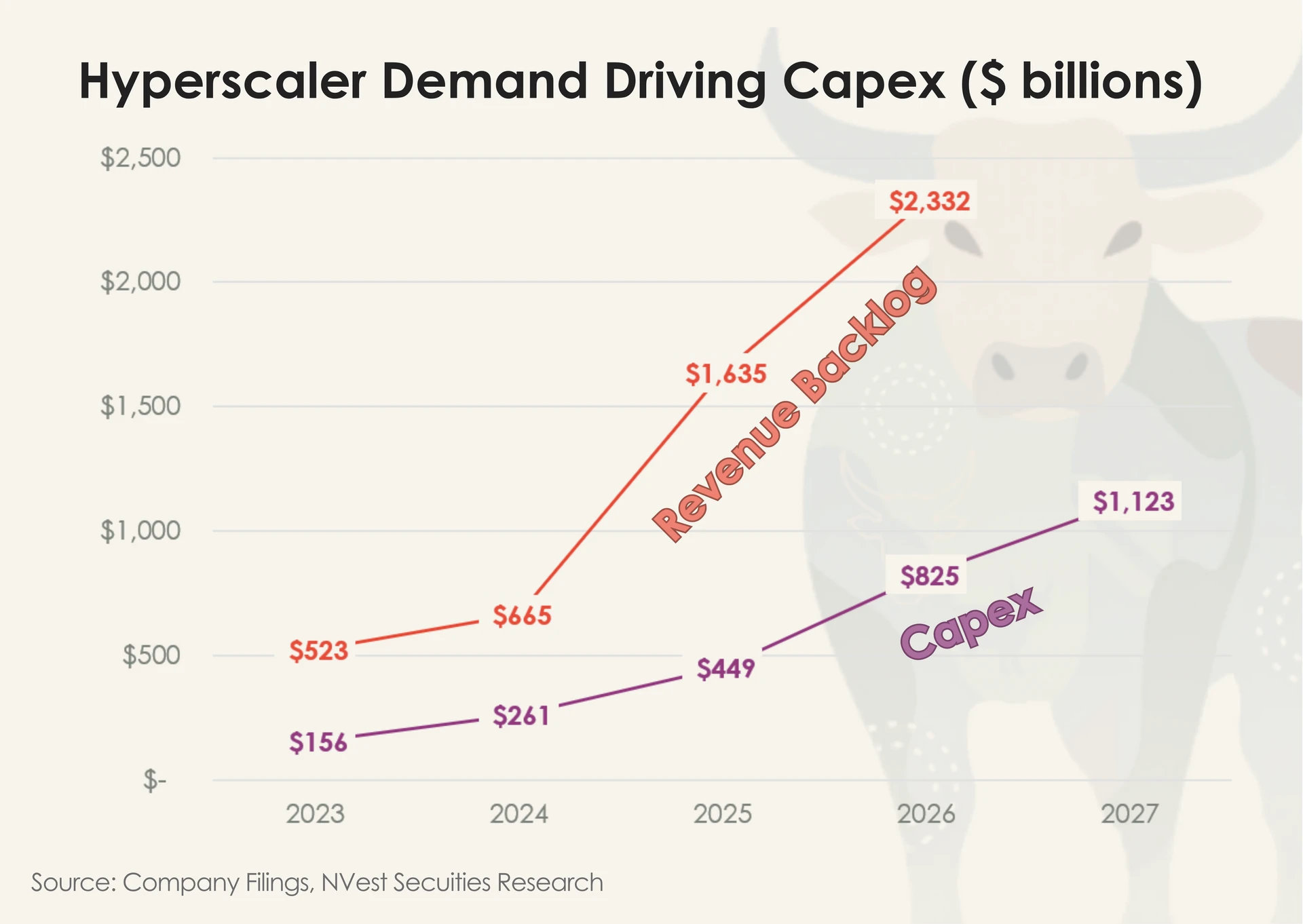
As investors focus on Capex spend, the combined order backlog across the big four hyperscalers reached $2.33 trillion this quarter, up from $809 billion a year ago (+188.3%). Backlog is essentially customer commitments to additional capacity as it comes online, often secured with upfront deposits. Amazon recorded the largest sequential increase, adding $132 billion of backlog during the quarter; representing growth of 154% Y/Y and 36% Q/Q.
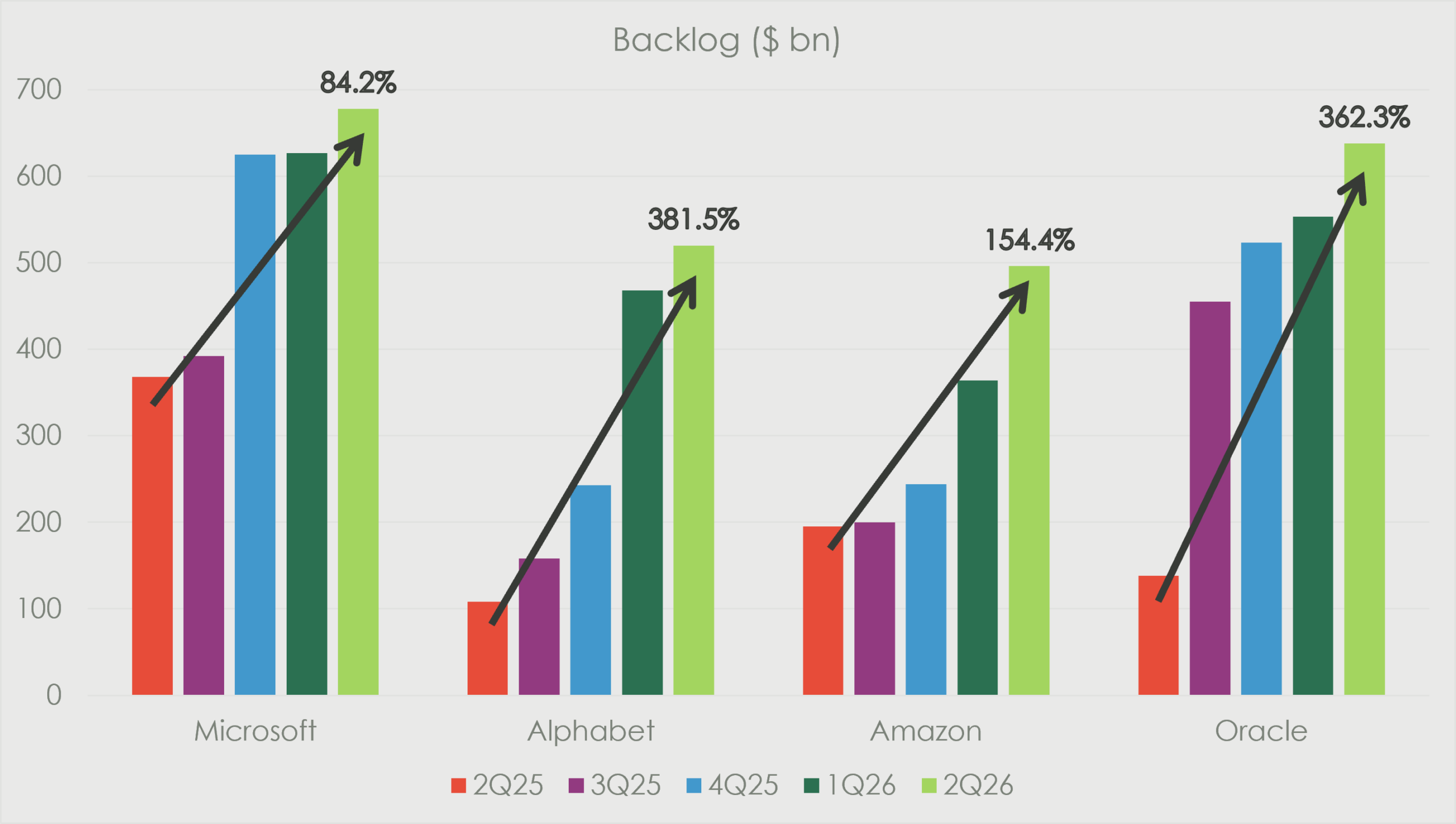
Backlog growth shows the depth of demand and is an indicator of future revenues. Customers continue to commit to significantly more capacity, and backlog is expanding rapidly – outpacing the increase in infrastructure spending.
This revenue backlog growth gives us confidence that the Capex will generate very attractive returns, that will ultimately justify the investments.
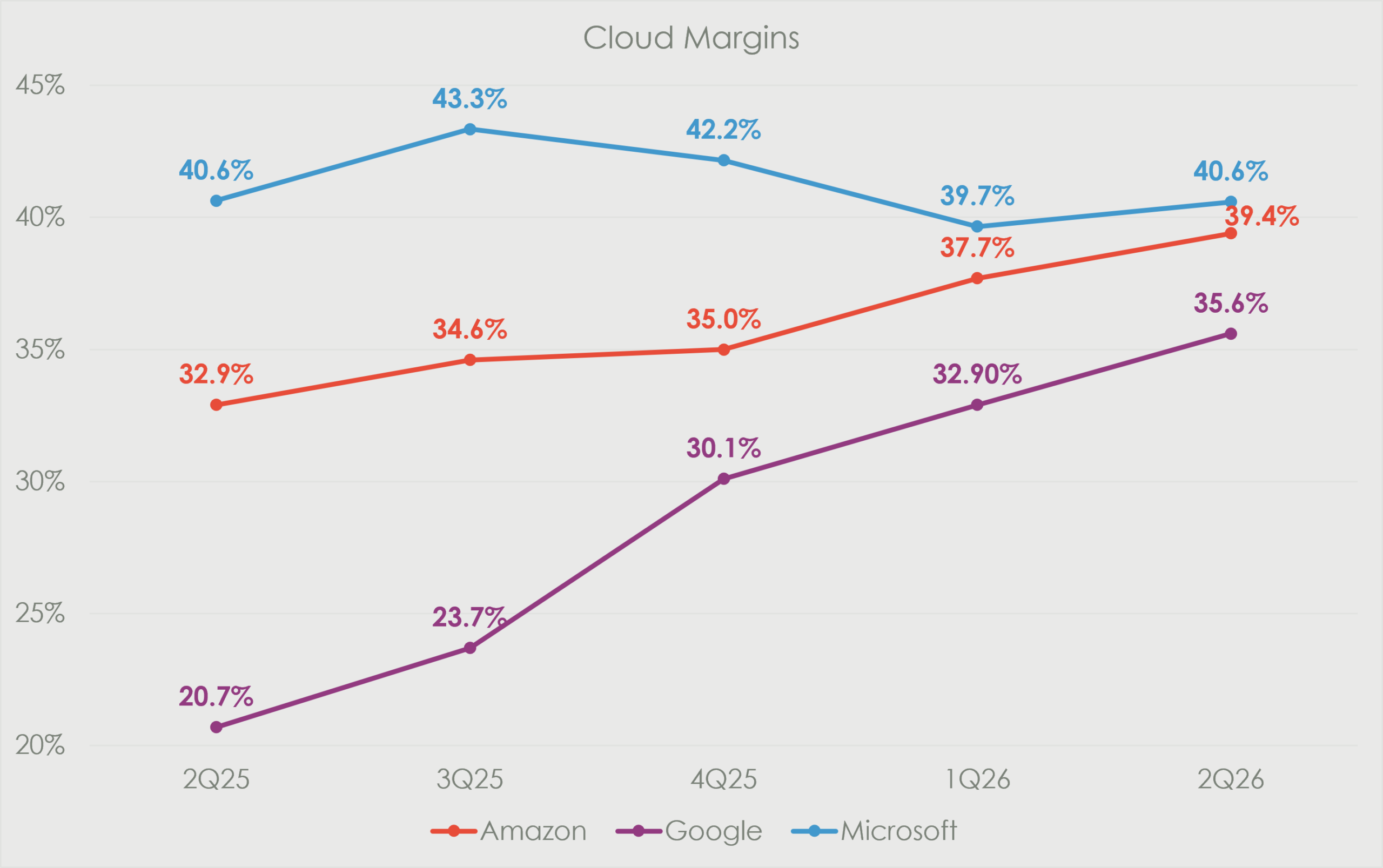
Profitability Expands Despite the Heavy AI Investment
This is no longer a story about increasing capex, but also about the returns on those investments. As new capacity comes online and is quickly absorbed, the major Cloud platforms are becoming more efficient at utilising that capacity and converting it into revenue and profit growth.
Portfolio Positioning
Microsoft, Alphabet and Amazon are particularly well positioned for the next phase of AI and all three have a distinct advantage. Microsoft has an entrenched presence across the enterprise space; Alphabet combines its AI models with an enormous consumer, data and distribution ecosystem; and Amazon operates the largest individual hyperscale Cloud platform, giving AWS a substantial installed customer base to deploy AI services.
We already hold both Microsoft and Alphabet in the portfolio, and recently added Amazon ahead of the company’s second-quarter earnings release.
Shares rallied 15% after results showed material earnings acceleration in AWS, with growth accelerating to 37%, and backlog increasing by $132 billion sequentially – the largest backlog increase among the major hyperscalers. The average contract also extended to 6.4 years, providing greater visibility into future revenue. Amazon continues to invest aggressively, with capacity expected to roughly double between 2025 and 2027 – from 3.9GW to an estimated 7.8GW.
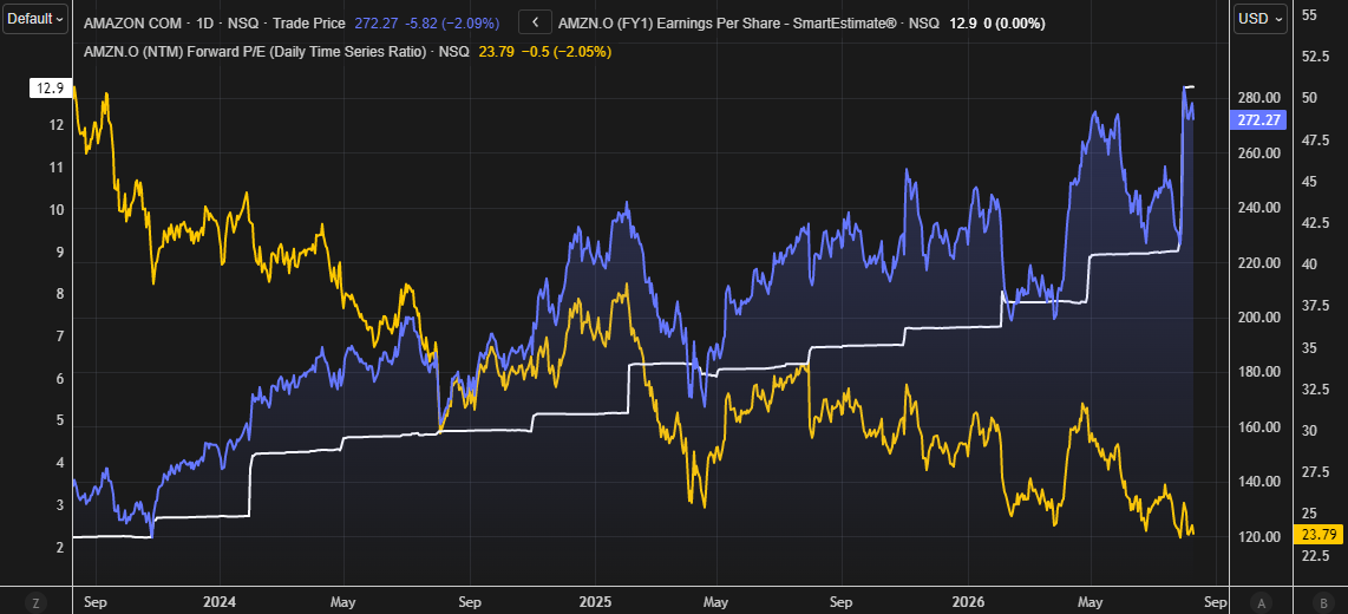
From a valuation perspective, Amazon is trading at the lower end of its historical range, at approximately 23.8x earnings, despite expectations for double-digit earnings growth. We believe Amazon is well positioned to convert its substantial investment in Cloud and AI infrastructure into accelerating revenue and earnings growth.
Conclusion
The latest results reinforce our view that AI monetization remains in its early stages. Accelerating Cloud growth, expanding backlogs, and improving profitability support our bullish outlook on Microsoft, Alphabet and Amazon.